
Introduction to Pickleball
Pickleball is a paddle sport that resembles tennis from the back court, but when you start to approach the net, the shot making becomes unique to pickleball. Pickleball is a fun, social, and competitive game that can be enjoyed by players of all ages and skill levels. Created in 1965 on Bainbridge Island, Washington, pickleball has grown from a backyard family pastime to one of the fastest-growing sports in America, with millions of players nationwide and a rapidly expanding international presence.

The game is played on a court similar in size to a badminton court, with a modified tennis net. Players use solid paddles made of wood, composite materials, or graphite to hit a perforated polymer ball over the net. The unique aspects of pickleball, including the non-volley zone (commonly known as “the kitchen”) and the two-bounce rule, create a dynamic game that emphasizes strategy and finesse over raw power.
USA Pickleball, as the National Governing Body of American pickleball, formulates and interprets all the rules of the sport to preserve its traditional nature and character while ensuring fair and consistent play across recreational, social, organized league, and tournament settings. The official rulebook, updated annually, serves as the definitive guide for all aspects of the game.
This comprehensive document presents the complete rules of pickleball based on the official 2025 USA Pickleball Rulebook, providing players, officials, and enthusiasts with a thorough understanding of how the game is played, officiated, and enjoyed at all levels of competition.
Whether you’re a Pickleball beginner just learning the basics or an experienced player looking to deepen your understanding of the nuances of the game, this guide will serve as an essential resource for all things pickleball.
Court Dimensions and Equipment Specifications
The Pickleball Court
The pickleball court is a rectangular playing surface measuring 20 feet (6.10 m) in width and 44 feet (13.41 m) in length, identical for both singles and doubles play. The court dimensions are measured to the outer edges of the baselines and sidelines. The lines
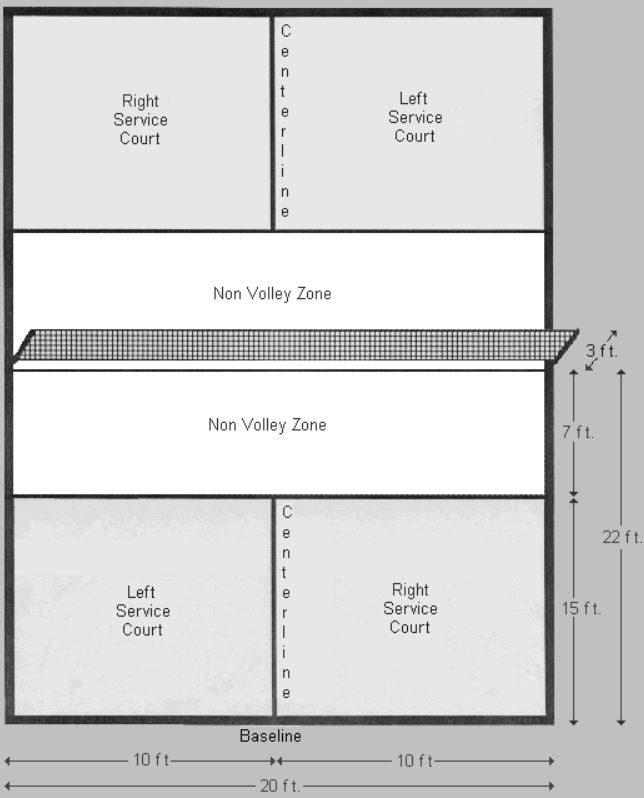
defining the court boundaries are 2 inches (5.08 cm) wide and should be a consistent color that clearly contrasts with the court surface color.
The court is divided into sections by several important lines. The net divides the court in half, creating two equal playing areas. On each side of the net, a non-volley zone extends 7 feet (2.13 m) from the net. This area, commonly referred to as “the kitchen,” is bounded by a line parallel to the net. The non-volley zone line is considered part of the non-volley zone.
Beyond the non-volley zone, each side of the court is further divided into two service courts. A centerline, extending from the non-volley zone line to the baseline, creates right and left service courts. The right service court is the area to the right of the centerline when facing the net, and the left service court is the area to the left of the centerline.
The minimum recommended playing surface area, which includes the court and surrounding space, is 30 feet (9.14 m) wide by 60 feet (18.29 m) long, providing adequate room for player movement beyond the court boundaries. For tournament play, additional space may be required.
The court surface can be made of various materials, including concrete, asphalt, wood, or specialized sports surfaces, as long as it provides a uniform, level playing area. Temporary courts can be set up on existing tennis courts or other suitable surfaces by using portable nets and temporary court lines.
The Net
The pickleball net spans the width of the court, positioned precisely at the center. The net should be 36 inches (0.914 m) high at the sidelines and 34 inches (0.86 m) high at the center. This slight dip in the middle is intentional and specified in the official rules.
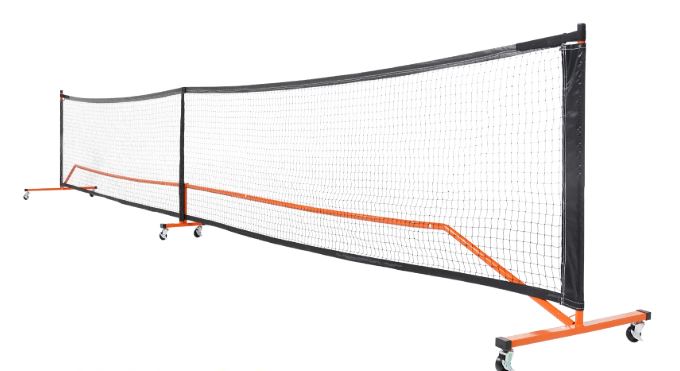
The net is suspended between two posts that stand outside the sidelines, with the top of the net secured at the regulation height. The net itself is made of mesh material that allows visibility through it while effectively stopping the ball. The top of the net features a 2-inch (5.08 cm) white binding along its entire length, and the net may be supported by a center strap to maintain the proper height at the middle.
The Paddle
Pickleball paddles must conform to specific regulations to be considered legal for sanctioned play. The paddle face may be made of any material that does not create an unfair advantage, such as wood, composite materials, graphite, fiberglass, or various
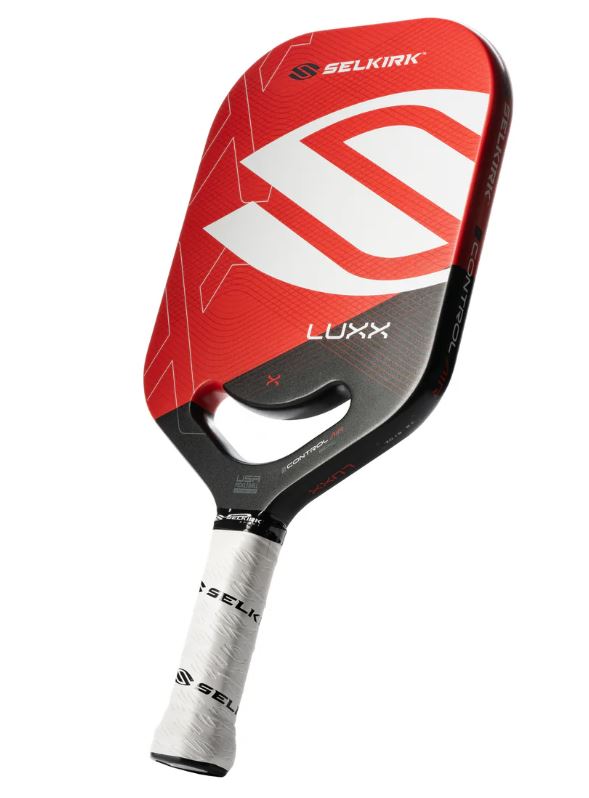
polymers. The surface must be smooth and free of texturing, holes, or indentations that would impart additional spin on the ball.
The paddle’s total length, including the handle, cannot exceed 17 inches (43.18 cm). The width cannot exceed 8.5 inches (21.59 cm). There is no restriction on paddle thickness, though most paddles range from 13-16 millimeters thick. The combined length and width cannot exceed 24 inches (60.96 cm).
Paddles must be a solid color on both sides, with the only allowable markings being the manufacturer’s name or logo, model information, and small identification marks. Any aftermarket additions to the paddle, such as lead tape or grip enhancers, must not alter the paddle specifications beyond the allowed limits.
USA Pickleball maintains an “Approved Paddle List” for tournament play, and players in sanctioned events must use paddles from this list. For recreational play, these strict regulations may be relaxed, though the basic size and material requirements are generally followed.
The Ball
The pickleball is a unique plastic ball with holes, similar in appearance to a wiffle ball but designed specifically for the sport. Official pickleballs must meet several specifications:
The ball must be made of a durable, smooth molded material with no texturing. It must have between 26 and 40 circular holes, with spacing and hole pattern being uniform across the ball’s surface. The ball diameter must measure between 2.874 inches (7.3 cm) and 2.972 inches (7.55 cm).
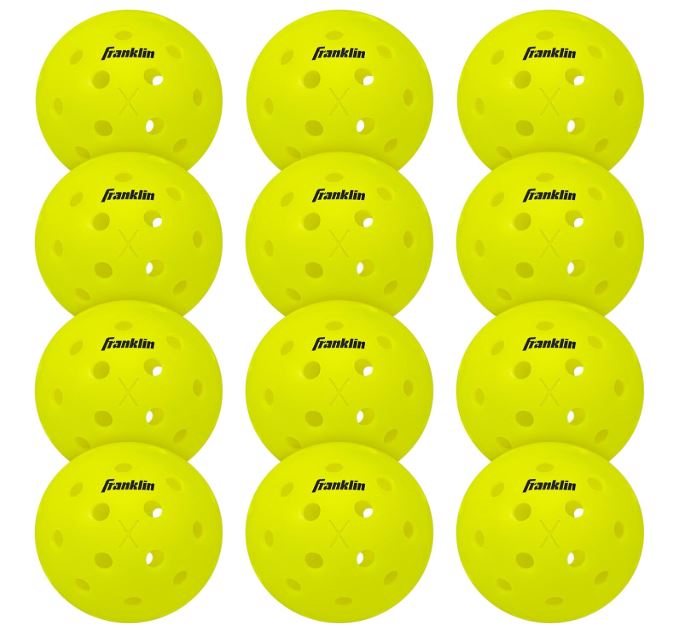
Balls are manufactured in two distinct types: indoor and outdoor. Indoor balls typically have larger holes and are slightly lighter, designed for play on smoother indoor surfaces. Outdoor balls are generally heavier with smaller holes, making them more resistant to wind and suitable for outdoor courts. The weight of regulation balls ranges from 0.78 to 0.935 ounces (22.1 to 26.5 grams).
The color of the ball should contrast with the court surface color to ensure visibility during play. Common colors include white, yellow, and orange, though other colors are permitted as long as they provide adequate contrast with the playing surface.
For sanctioned tournaments, only balls listed on the USA Pickleball “Approved Ball List” may be used. Tournament directors specify which approved ball will be used for their event, and this information is typically included in the tournament details provided to participants.
Serving Rules and Procedures
Basic Pickleball Serving Requirements
The pickleball serve is one of the most regulated aspects of pickleball, with specific rules designed to ensure fairness and consistency. The serve initiates each rally and must be executed according to strict guidelines. Understanding these requirements is essential for proper play at all levels.
The server must serve from behind the baseline, with at least one foot within the imaginary extension of the centerline and the sideline. At the moment the ball is struck, the server’s feet may not touch the court or outside the imaginary extension of the sideline or centerline, and at least one foot must be behind the baseline on the playing surface or the ground behind the baseline.
The serve must be made diagonally crosscourt, landing within the boundaries of the opposite diagonal service court. The ball must clear the non-volley zone, including the non-volley zone line. A serve that touches the non-volley zone line is considered a fault.
Serving Motion
The serving motion in pickleball follows specific requirements that distinguish it from other racquet sports. The server’s arm must be moving in an upward arc at the time the ball is struck. The paddle contact with the ball must not be made above waist level, which is defined as the navel level. Additionally, the highest point of the paddle head must not be above the highest part of the wrist when the ball is struck.
These requirements are designed to prevent players from generating excessive power and spin through overhead serving motions, maintaining the strategic nature of the game rather than allowing it to become dominated by powerful serves.
The Pickleball Drop Serve
As an alternative to the traditional serve, players may opt for a “pickleball drop serve.” In this serving method, the server drops the ball from any natural height and hits it after it bounces on the playing surface. When using the drop serve, the restrictions regarding upward arc motion, waist level contact, and wrist position do not apply. However, all other serving rules, including foot placement and service court requirements, remain in effect.
The drop serve was introduced to simplify the serving process and reduce disputes about serving form. It provides an accessible option for beginners while still requiring accuracy and control from the server.
Service Sequence
In doubles play, the service sequence follows specific patterns that determine which player serves and from which side of the court. At the start of each game, only one player on the first serving team has the opportunity to serve before the service passes to the opposing team. This initial service exception is often referred to as the “first server exception.”
After the first service sequence, both players on each team have the opportunity to serve before the service passes to the opposing team. The first server of each side-out begins serving from the right-hand court (even court). If a point is scored, the server switches sides and serves from the left-hand court (odd court). The server continues alternating between the right and left service courts each time a point is scored.
When the serving team commits a fault, the service passes to the server’s partner (except during the first service sequence of the game). The second server serves until their team commits a fault, at which point the service passes to the opposing team.
In singles play, the server serves from the right-hand court when their score is even (0, 2, 4, 6, 8, 10) and from the left-hand court when their score is odd (1, 3, 5, 7, 9).
Pickleball Service Lets
Unlike many racquet sports, pickleball does not have service lets. If the served ball touches the net and lands in the proper service court, the ball remains in play. This rule eliminates disputes about whether the ball touched the net and keeps the game flowing without unnecessary replays.
Server Calling the Score
Before serving, the server must call the score to ensure all players are aware of the current game situation. In traditional scoring, the server calls out three numbers: the serving team’s score, the receiving team’s score, and the server number (1 or 2). For example, “5-3-1” indicates the serving team has 5 points, the receiving team has 3 points, and this is the first server of the serving team.
In singles play, only two numbers are called: the server’s score followed by the receiver’s score. For example, “5-3” indicates the server has 5 points and the receiver has 3 points.
Calling the score before each serve helps prevent disputes and ensures all players are ready for play to begin. The serve should not be made until the score has been called and all players are prepared.
Scoring System and Game Format
Traditional Side-Out Scoring
The traditional scoring system in pickleball follows a side-out format, where points can only be scored by the serving team. When the receiving team wins a rally, they earn the right to serve (side-out) but do not score a point. This system rewards strong defensive play and creates strategic decisions about risk-taking during service and return
situations.
Games using traditional scoring are typically played to 11 points, and the winning team must win by a margin of at least 2 points. If the score reaches 10-10, play continues until one team achieves a 2-point lead (12-10, 13-11, etc.). In tournament settings, games may be played to 15 or 21 points, also with a 2-point margin requirement, depending on the event format and time constraints.
The traditional scoring system creates a natural ebb and flow to the game, as teams must capitalize on their serving opportunities to build their score while playing strategically during receiving situations to earn the right to serve.
Rally Scoring
While traditional side-out scoring remains the standard for most pickleball play, rally scoring has gained popularity in certain formats and recreational settings. Under rally scoring, a point is awarded after every rally, regardless of which team served. The team that wins the rally scores a point and either retains the serve (if they were serving) or earns the serve (if they were receiving).
Rally scoring tends to produce faster games since points are scored more frequently. This scoring method is sometimes used in recreational play, time-limited settings, or specific tournament formats where quicker games are desired. Games using rally scoring are typically played to 15 or 21 points, with the same 2-point margin requirement as traditional scoring.
Server Position Based on Score
In traditional scoring, the position of players on the court is determined by the score. When the serving team’s score is even (0, 2, 4, 6, 8, 10), the player who was designated as the first server at the beginning of the game will be in the right-side court when serving or receiving. When the score is odd (1, 3, 5, 7, 9), that player will be in the left-side court.
This system ensures that players maintain their proper positions throughout the game and helps prevent confusion about serving order and court positioning. In tournament play, referees may assist in ensuring players are in the correct positions based on the score.
Match Formats
Pickleball matches can be structured in various formats depending on the context of play. In recreational settings, players might simply play a single game to 11 points. In more competitive environments, matches typically consist of the best of three games, with each game played to 11 points (win by 2).
Tournament formats vary widely based on the event type, number of participants, and time constraints. Common tournament formats include:
- Round Robin: Each player or team plays against every other player or team in their
group, with the top finishers advancing to a playoff or championship round.
2. Single Elimination: Players or teams are eliminated after one loss, with the bracket narrowing until a champion is determined.
3. Double Elimination: Players or teams must lose twice before being eliminated, providing a second chance through a consolation bracket.
4. Modified Pool Play: Players or teams are divided into pools for initial round-robin play, with top finishers from each pool advancing to elimination rounds.
Tournament directors have discretion in determining the specific format, game points (11, 15, or 21), and advancement criteria based on the event’s goals and constraints.
Time-Limited Games
In settings where court time is limited or a large number of games need to be completed within a specific timeframe, time-limited games may be implemented. In this format, a
time limit (often 15 or 20 minutes) is set for each game, and the team leading when time expires is declared the winner.
If the score is tied when time expires, a final “sudden death” point is typically played to determine the winner. Time-limited games often use rally scoring to maximize the number of points played within the allotted time.
Starting the Game
Before the game begins, any fair method can be used to determine which player or team has first choice of side, service, or receive. Common methods include a coin flip, paddle spin, or random selection (such as writing a 1 or 2 on the back of the score sheet).
The team or player winning the selection typically has three options: 1. Choose to serve or receive first 2. Choose which side of the court to start on 3. Defer the choice to their opponents
After the first game in a match, the teams typically switch sides, and the team that did not serve first in the previous game serves first in the next game. In a deciding third game, teams switch sides when the first team reaches 6 points (in an 11-point game) or a similar midpoint in longer games.
Two-Bounce Rule and Rally Play
The Two-Bounce Rule Explained
The two-bounce rule is one of the most distinctive aspects of pickleball that sets it apart from other racquet sports. This fundamental rule requires that when the ball is served, the receiving team must let it bounce once before returning it, and then the serving team must also let the return bounce once before hitting it. After these two mandatory bounces (one on each side of the court), either team may choose to play the ball before it bounces (volley) or after it bounces (groundstroke).
This rule serves several important purposes in the game. First, it eliminates the serve and-volley advantage that would otherwise heavily favor the serving team. By requiring the serving team to stay back and play the third shot off a bounce, the rule creates a more balanced starting position for each rally. Second, it extends the length of rallies by preventing immediate put-aways at the net, making the game more enjoyable and accessible to players of all skill levels. Finally, it creates a strategic progression in each
rally, from the serve to the “third shot” (typically a drop shot by the serving team) to the eventual net game.
The two-bounce rule applies at the beginning of every rally, regardless of the score or situation. Even after a side-out or when starting a new game, the rule remains in effect. The only exception is during a replay of a rally due to a hinder or other specific circumstances, in which case the two-bounce rule applies again from the beginning of the replayed rally.
Violations of the Two-Bounce Rule
A violation of the two-bounce rule occurs when a player hits the ball in the air (volleys) before the ball has bounced once on their side of the court during the first two shots of the rally. This violation results in a fault, and the consequences depend on which team committed the fault:
1. If the receiving team violates the two-bounce rule by volleying the return of serve, it results in a point for the serving team.
2. If the serving team violates the two-bounce rule by volleying the first return, it results in a loss of serve (side-out) or, if the second server committed the fault, a point for the receiving team and a side-out.
Players must be aware of this rule at all times, especially during the opening sequence of each rally. In tournament play, referees closely monitor compliance with the two-bounce rule, as violations are among the most common faults called during matches.
Rally Progression After the Two-Bounce Rule
Once both teams have satisfied the two-bounce rule requirements, the rally enters its open play phase. During this phase, both teams may freely choose to hit the ball either before it bounces (volley) or after it bounces (groundstroke), with the exception of shots taken while standing in the non-volley zone (kitchen).
The strategic progression of a typical rally follows a pattern that has evolved with the game:
1. pickleball serve: The serving team delivers a deep serve, typically aiming to push the receiving team back.
2. Return of serve: The receiving team must let the serve bounce and then typically returns it deep to the baseline.
3. Third Shot Drop: The serving team must let this return bounce and often plays a “third shot drop”—a soft shot that lands in the non-volley zone, forcing the receiving team to hit up on the ball.
4. Pickleball Transition Game: Both teams work to move forward to the non-volley zone line, the optimal position for continued play.
5. Pickleball Dinking Game: Once both teams are at the non-volley zone line, the rally often
transitions into a strategic exchange of soft shots (dinks) just over the net, with each team looking for an opportunity to hit a put-away shot.
This progression from baseline play to net play is a defining characteristic of pickleball strategy and is directly influenced by the two-bounce rule. Advanced players understand this progression and work to control the rhythm and pace of the rally to their advantage.
Dead Ball Situations
A rally continues until the ball becomes dead due to a fault or other specific circumstances. The ball becomes dead when:
1. A fault occurs (such as the ball landing out of bounds, a player touching the net, or a violation of the non-volley zone rules).
2. The ball bounces twice on one side of the court before being struck.
3. The ball contacts a permanent object (such as the ceiling, lights, or court fixtures) after it has crossed the net.
4. A hinder is called (such as a ball from another court entering the playing area).
When the ball becomes dead, the rally ends, and either a point is awarded, the serve changes to the server’s partner, or a side-out occurs, depending on the specific situation and which team committed the fault.
Non-Volley Zone Rules
The Non-Volley Zone Defined
The non-volley zone, commonly referred to as “the kitchen,” is one of the most distinctive features of a pickleball court and plays a crucial role in the strategy and flow of the game. This area extends 7 feet (2.13 m) from the net on both sides of the court and

spans the entire width of the court. The non-volley zone is clearly marked by a line parallel to the net, and this line is considered part of the non-volley zone.
The primary purpose of the non-volley zone is to prevent players from executing smashes from a position close to the net, which would make the game too heavily favored toward aggressive net play and diminish the strategic elements that make pickleball unique. By requiring players to let the ball bounce before hitting it when in this zone, the rules create a more balanced and strategic game that rewards finesse and placement over raw power.
Volley Restrictions in the Non-Volley Zone
The fundamental rule governing the non-volley zone is that players may not volley the ball (hit it before it bounces) while standing in or touching the non-volley zone, including the line. This restriction applies regardless of where the ball is hit from—even if a player is positioned outside the non-volley zone but reaches into it to volley the ball, a fault occurs.
Specifically, a fault occurs if, when volleying a ball, any part of the player’s body, clothing, or paddle touches the non-volley zone or the non-volley zone line. This includes the player’s momentum carrying them into the non-volley zone after the volley is executed. Even if the volleyed ball is declared dead before the player touches the non volley zone, the fault still stands if the player’s momentum from the volley causes them to touch the zone.
It’s important to note that players may stand in the non-volley zone at any time except when volleying the ball. Players may enter the non-volley zone to play balls that have bounced, and they may stay there as long as they wish. They may also volley balls while standing outside the non-volley zone, as long as they don’t touch the zone during or immediately after the volley due to momentum.
Common Non-Volley Zone Violations
Several common violations related to the non-volley zone occur in pickleball play:
1. Momentum Carry: A player volleys the ball while outside the non-volley zone but
their forward momentum carries them into the zone after the hit. This is a fault, even if the ball is already dead when they touch the zone.
2. Touching the Line: A player volleys while their foot is touching the non-volley zone line. Since the line is part of the zone, this constitutes a fault.
3. Paddle Drop: After volleying, a player drops their paddle in the non-volley zone
due to momentum from the volley. Since the paddle is considered part of the player, this results in a fault.
4. Partner Contact: In doubles, if one player volleys and their momentum causes
them to contact their partner who is standing in the non-volley zone, a fault occurs.
5. Clothing Touch: Any part of a player’s clothing, such as a hat falling off into the non-volley zone after a volley, results in a fault if it’s due to the momentum of the volley.
Strategic Implications of the Non-Volley Zone
The non-volley zone rules create a strategic dynamic that is central to pickleball play. Since players cannot volley while in the zone, they must position themselves carefully at the edge of the zone (often called “the kitchen line”) to be in the optimal position for both offense and defense.
This positioning leads to the distinctive “dinking” game in pickleball, where players exchange soft shots that land in the opponent’s non-volley zone, forcing them to hit up on the ball rather than attack. The player who can maintain patience and force their opponent into a mistake often gains the advantage in these exchanges.
Advanced players develop specific footwork and body control to play effectively at the non-volley zone line without committing faults. They learn to stop their momentum quickly after volleys and to retreat slightly from the line when necessary to create space for their swings.
Grounding the Paddle
One technique players use to avoid non-volley zone violations is “grounding the paddle.” After executing a volley near the non-volley zone line, a player may quickly place their paddle on the court surface outside the non-volley zone to help stop their forward momentum and prevent themselves from stepping into the zone. This is a legal move as long as the paddle contacts the court outside the non-volley zone.
However, if a player grounds their paddle inside the non-volley zone after a volley, it is considered a fault, as the paddle is an extension of the player and subject to the same restrictions regarding non-volley zone contact after a volley.
Faults and Violations
Definition of a Fault
In pickleball, a fault is any action that stops play because of a rule violation. When a fault occurs, the rally immediately ends, and the appropriate consequence is applied based on which team committed the fault and the current game situation. Understanding the various faults and their consequences is essential for proper play and officiating.
The consequences of a fault depend on which team committed it:
1. If the receiving team commits a fault, a point is awarded to the serving team.
2. If the serving team commits a fault, the server loses their serve. If it was the first
server, the service passes to their partner. If it was the second server or a singles game, a side-out occurs, and service passes to the opposing team.
Faults can occur during the serve, during rally play, or due to specific player actions or positions. The following sections detail the various types of faults that can occur during pickleball play.
Service Faults
Service faults occur when the server violates one or more of the serving rules. These include:
1. Foot Fault: The server’s feet are positioned incorrectly at the time of striking the ball. This includes touching the court, the baseline, the area outside the imaginary
extension of the sideline or centerline, or not having at least one foot behind the baseline.
2. Improper Service Motion: The server’s arm is not moving in an upward arc at the
time the ball is struck, the paddle contact with the ball is made above waist level, or the highest part of the paddle head is above the highest part of the wrist when the ball is struck. These restrictions do not apply when using the drop serve method.
3. Incorrect Service Court: The server serves from the wrong side of the court based on the score, or the served ball lands in the incorrect service court.
4. Non-Volley Zone Violation on Serve: The served ball touches the non-volley zone line or any part of the non-volley zone before bouncing elsewhere.
5. Out of Bounds Serve: The served ball lands out of bounds, outside the confines of the proper service court.
6. Net Fault on Serve: The served ball touches the server, the server’s partner, or
anything they are wearing or carrying before touching the court surface. Note that if the served ball touches the net and lands in the proper service court, it remains in play (there are no service lets in pickleball).
Rally Faults
Rally faults occur during the course of play after the serve has been successfully executed. These include:
1. Two-Bounce Rule Violation: A player volleys the ball before it has bounced once on each side of the net at the start of the rally.
2. Non-Volley Zone Violation: A player volleys the ball while standing in the non
volley zone or touching the non-volley zone line, or a player’s momentum from a volley causes them or anything they are wearing or carrying to touch the non volley zone or line.
3. Out of Bounds: The ball lands outside the court boundaries. A ball that touches any part of the line is considered in.
4. Net Contact: A player, their clothing, or their paddle touches the net or the net posts while the ball is in play.
5. Double Bounce: The ball bounces twice on one side before being struck by a player.
6. Body or Clothing Contact: The ball in play strikes a player or anything they are
wearing or carrying, except for the paddle hand below the wrist. If the ball strikes any other part of the player’s body, clothing, or non-paddle hand, it is a fault.
7. Carrying or Catching: A player carries or catches the ball on the paddle rather than hitting it with a clean strike.
8. Double Hit: A player deliberately hits the ball twice before it is returned over the net. Incidental double hits during a single continuous motion are allowed.
Other Pickleball Violations
Additional violations that result in faults include:
1. Distraction: A player deliberately distracts an opponent when the opponent is
about to play the ball.
2. Touching the Ball: A player touches the ball with anything other than their paddle or paddle hand below the wrist.
3. Crossing the Plane: A player or their paddle crosses the plane of the net before striking the ball, unless the ball has first bounced on their side and then travels over the net due to spin or wind.
4. Hitting the Ball Before It Crosses: A player strikes the ball before it has crossed to
their side of the net, unless the ball has bounced on their side and then travels over the net due to spin or wind.
5. Improper Equipment: Using a paddle that does not conform to equipment
specifications during play.
Pickleball Hinders
A hinder occurs when a rally is disrupted by an external factor or certain specific conditions. Common hinders include:
1. A ball from another court enters the playing area.
2. A player from another court enters the playing area.
3. Any other unintentional occurrence that disrupts play and is outside the control of the players.
When a hinder occurs, the rally is replayed with no penalty or point awarded. The server resumes play at the same score and from the same service court, with one service attempt allowed.
Calling Faults
In recreational play without officials, players are responsible for calling faults on themselves. Players should immediately call faults that they commit, and play should stop immediately when a fault occurs.
In officiated matches, the referee has the authority to call all faults. However, players may still call faults on themselves. Line judges may assist the referee with line calls, determining whether balls land in or out of bounds.
The integrity of the game relies on players’ honesty in calling faults on themselves, especially in recreational and self-officiated play. When in doubt about whether a fault occurred, the benefit of the doubt should go to the opponent.
Pickleball Line Calls and Officiating
Pickleball Line Call Rules
Line calls are a critical aspect of pickleball that directly impact the fairness and flow of the game. The basic rule for line calls is straightforward: a ball contacting any part of a line is considered “in,” except for the non-volley zone line on a serve. A serve that touches the non-volley zone line is a fault.
In recreational and self-officiated play, players are responsible for making line calls on their side of the court. The etiquette of the game dictates that players make these calls honestly and promptly. When a player is unsure whether a ball landed in or out, the benefit of the doubt should go to the opponent, meaning the ball should be called “in.” This principle is often summarized as “if you’re not sure, it’s in.”
For doubles play, either player on a team may make a line call. If partners disagree on a call, the ball is considered “in.” This rule reinforces the principle of giving the benefit of the doubt to the opponent when uncertainty exists.
Promptness of Calls in Pickleball
Line calls should be made promptly after the ball lands. A delay in making a call can create confusion and disputes. If a player takes too long to make a call, it may be interpreted as uncertainty, in which case the ball should be considered “in.”
The official rules specify that calls should be made “promptly,” though no specific time limit is defined. In practice, this means making the call immediately after the ball lands and before the next shot is played. If a player makes a late “out” call after initially playing the ball, the ball is still considered “in,” and play should continue.
Overrules and Pickleball Appeals
In self-officiated play, players may not appeal line calls made by their opponents. The team making the call has the final decision on their side of the court. However, players may voluntarily overturn their own line call if they realize they made an error.
In officiated matches, the referee has the authority to overrule a player’s line call if the referee clearly saw the ball land differently than called. Line judges may also be used in tournament play to assist with line calls, particularly on the baseline and sidelines.
Out Calls During Play
When a player makes an “out” call during a rally, play should stop immediately. If an “out” call is made and then reversed, a replay (hinder) occurs if the player making the call was reasonably affected by their own call. However, if the opposing team was affected by the call, they may claim a hinder and request a replay.
If a player makes an “out” call and then continues to play, the “out” call is withdrawn, and play should continue. This situation often occurs when a player is unsure about a call but continues playing to avoid stopping the rally unnecessarily.
Tournament Officiating
In sanctioned tournaments, matches may be officiated by a referee who has the authority to make all line calls and rule on faults. The referee’s decisions are final except in specific circumstances where an appeal to the tournament director may be permitted.
In addition to the referee, line judges may be assigned to assist with line calls. When line judges are used, they typically focus on specific lines (such as the baseline or sidelines) and signal whether balls landing near those lines are “in” or “out.” The referee may overrule a line judge’s call if the referee clearly saw the ball land differently.
The highest level of tournament play may include a referee, line judges, and a referee assistant who helps track the score and service order. This comprehensive officiating team helps ensure fair and accurate play at elite competitive levels.
Code of Ethics for Line Calls
The USA Pickleball rule book emphasizes the importance of ethical line calling as fundamental to the sport. Players are expected to:
1. Call the lines on their side of the court fairly and honestly, regardless of the score or point in the match.
2. Give opponents the benefit of the doubt on close calls.
3. Accept opponents’ line calls without argument or complaint.
4. Correct their own calls if they realize they made an error.
5. Compliment opponents on good line calls.
This code of ethics helps maintain the integrity of the game and promotes a positive playing experience for all participants. Players who consistently make questionable line calls may find themselves unwelcome in recreational play settings and may face consequences in tournament play if their behavior is deemed unsportsmanlike.
Pickleball Tournament Formats and Special Rules
Pickleball Tournament Structures
Pickleball tournaments can be organized in various formats to accommodate different numbers of participants, time constraints, and competitive objectives. The most common tournament structures include:
Single Elimination
In a single elimination tournament, players or teams are eliminated after one loss. The bracket narrows with each round until only one undefeated player or team remains as the champion. This format is efficient for large draws and limited time frames but offers participants only one chance at victory.
To maximize playing opportunities in single elimination formats, consolation brackets are often added. These allow players who lose in early rounds to compete against other eliminated players, providing additional matches and potentially determining lower place finishes.
Double Elimination
Double elimination tournaments require players or teams to lose twice before being eliminated. After an initial loss, participants move to a “losers” or “consolation” bracket where they continue to compete. The winner of the losers bracket typically faces the winner of the winners bracket in the final round, with special rules often applying to this championship match.
This format provides a second chance for players who may have had a bad match or faced a tough opponent early in the tournament. It also tends to produce more accurate rankings, as players must demonstrate consistency across more matches to advance.
Round Robin
In round robin play, each participant plays against every other participant in their group or flight. This format guarantees a specific number of matches for each player and is particularly useful for smaller draws or when ranking a group of players is the primary objective.
Round robin results are typically determined by win-loss record, with tiebreakers such as head-to-head results, point differential, or points scored used when necessary. The top finishers from each round robin group may advance to playoff rounds in larger tournaments.
Modified Pool Play
Modified pool play combines elements of round robin and elimination formats. Participants are initially divided into pools for round robin play, with the top finishers from each pool advancing to elimination rounds. This hybrid approach ensures multiple matches for all participants while still producing a clear champion through the elimination phase.
Tournament Divisions and Categories
Tournaments typically offer various divisions to group players by skill level, age, or other factors:
Skill Level Divisions
Skill-based divisions range from novice (2.0-2.5) to advanced (5.0+) based on the USA Pickleball rating system. These divisions ensure competitive matches between players of similar abilities.
Age Divisions
Age divisions typically start at 19+ (Open) and increase in five-year increments (35+, 40+, 45+, etc.). Senior divisions (50+, 55+, etc.) are particularly popular in pickleball due to the sport’s strong appeal among older adults.
Mixed Divisions
Mixed doubles divisions require teams to consist of one male and one female player. These divisions promote gender-inclusive competition and often feature unique strategic dynamics.
Special Tournament Rules
Certain rules apply specifically to tournament play or may be modified for tournament settings:
Time-Outs
In tournament play, each side is typically allowed two time-outs per game, each lasting one minute. Time-outs may only be called between rallies or when the ball is not in play. The referee or server must announce when 15 seconds remain in the time-out.
Medical time-outs may be granted for legitimate medical issues, typically lasting 15 minutes. Tournament directors establish specific policies regarding medical time-outs and their limitations.
Referee Authority
In officiated matches, the referee has final authority on all calls except in specific circumstances where appeals to the tournament director may be permitted. Players must respect referee decisions, though they may politely request clarification on rule interpretations.
Referees are responsible for calling the score, identifying the correct server and receiver, enforcing time limits, calling faults, and making or confirming line calls when necessary.
Line Judge Protocols
When line judges are used in tournament play, specific protocols govern their responsibilities and interactions with the referee. Line judges typically focus on specific
lines and use hand signals to indicate whether balls landing near those lines are “in” or “out.”
The referee may overrule a line judge’s call if the referee clearly saw the ball land differently. In some high-level tournaments, players may be allowed a limited number of appeals to review close line calls using video replay technology.
Alternate Scoring Methods
While traditional scoring to 11 points (win by 2) is standard, tournament directors may opt for different scoring formats based on time constraints and bracket sizes. Common alternatives include:
1. Games to 15 or 21 points (win by 2)
2. Single games to 15 or 21 instead of best-of-three formats
3. Rally scoring instead of traditional side-out scoring
4. Time-capped matches with the leader declared the winner when time expires
Any alternate scoring methods must be clearly communicated to participants before the tournament begins.
Player Conduct and Sportsmanship
Tournaments enforce specific standards for player conduct and sportsmanship. Violations may result in technical warnings, technical fouls (resulting in a point awarded to the opponent), or disqualification in severe cases.
Actions that may warrant disciplinary measures include: 1. Abusive language or gestures 2. Paddle abuse (throwing or breaking paddles) 3. Excessive arguing with officials 4. Intentional time delays 5. Coaching during unauthorized periods 6. Any behavior deemed unsportsmanlike by officials
Tournament directors have final authority on all disciplinary matters and may establish additional conduct rules specific to their events.
Pickleball Etiquette and Best Practices
General Pickleball Etiquette
Pickleball has developed a strong culture of sportsmanship and courtesy that extends beyond the formal rules. While not officially codified in the rulebook, these etiquette
guidelines help ensure a positive experience for all players and maintain the sport’s reputation for being both competitive and social.
Before Play Pickleball
Before starting a game, players should stretch and warmup, then introduce themselves to opponents and partners if they haven’t met previously. This simple courtesy sets a friendly tone for the match. Players should also confirm the scoring format and any local rules that might apply to the specific venue.
When warming up, keep the warm-up period reasonable (typically 5-10 minutes) and ensure that all players get equal opportunity to hit various shots. In recreational settings, more experienced players should be willing to accommodate newer players who may need additional warm-up time.
During Pickleball Play
During play, several etiquette practices are widely observed:
1. Line Calls: Make honest line calls on your side of the court. When in doubt, the ball should be called “in.” Compliment opponents on good line calls and graciously accept their calls without argument.
2. Score Announcement: The server should announce the complete score clearly before each serve and confirm that all players are ready. If there’s confusion about the score, discuss it respectfully and resolve any discrepancies before continuing play.
3. Ball Retrieval: Help retrieve balls from nearby courts promptly but without
disrupting ongoing play. When returning a ball to another court, roll it along the side or back of the court rather than sending it through an active playing area.
4. Court Awareness: Be aware of neighboring courts and avoid walking behind courts during active play, especially during serving. If you must cross behind a court, wait until their rally has concluded.
5. Paddle Handling: Never throw your paddle in frustration or celebration. This can damage equipment and potentially injure others.
After Pickleball Play
After completing a game or match, players should meet at the net to shake hands or tap paddles. Thanking opponents for the game and offering sincere compliments on good plays helps maintain the sport’s friendly atmosphere.
If others are waiting for court time, be prompt in gathering your belongings and clearing the court. Many facilities have specific rotation policies to ensure fair access to courts; familiarize yourself with and respect these local protocols.
Recreational vs. Competitive Play
The application of rules and etiquette may vary slightly between recreational and competitive settings. In recreational play, the emphasis is typically on enjoyment, inclusion, and skill development. Players may be more lenient with certain rules and more willing to offer advice or instruction to newer players.
In competitive or tournament play, stricter adherence to official rules is expected, and the focus shifts more toward performance and results. However, even in highly competitive settings, the fundamental principles of sportsmanship and respect should be maintained.
Common Pickleball Courtesies
Several additional courtesies contribute to a positive pickleball environment:
1. Positive Communication: Use positive language and encouragement with both partners and opponents. Avoid negative comments or excessive celebration that might be perceived as taunting.
2. Injury Prevention: If a ball from another court enters your court during play, immediately call “ball on court” to stop play and prevent potential injuries from players stepping on the ball.
3. Court Maintenance: Help maintain court conditions by removing debris, closing gates, and reporting any damage or hazardous conditions to facility management.
4. Inclusive Atmosphere: Welcome players of all skill levels and backgrounds. Be
willing to play with and against players of varying abilities in recreational settings.
5. Coaching Boundaries: In recreational play, offer advice only when it’s requested.
In competitive play, coaching is typically only permitted during specific times,
such as between games or during time-outs.
Pickleball Conflict Resolution
Disagreements occasionally arise during play, particularly regarding line calls, score keeping, or rule interpretations. When conflicts occur, players should:
1. Discuss the issue calmly and respectfully, focusing on the rule rather than personal accusations.
2. If agreement cannot be reached, consider replaying the point rather than
escalating the dispute.
3. In recreational settings without officials, the benefit of the doubt should generally
go to the opponent.
4. In tournament play, seek assistance from the referee or tournament director when necessary.
5. Remember that maintaining positive relationships and the integrity of the game is more important than any single point or match.
By adhering to these etiquette guidelines and best practices, players contribute to the welcoming, respectful culture that has helped pickleball become one of the fastest growing sports in the world.
